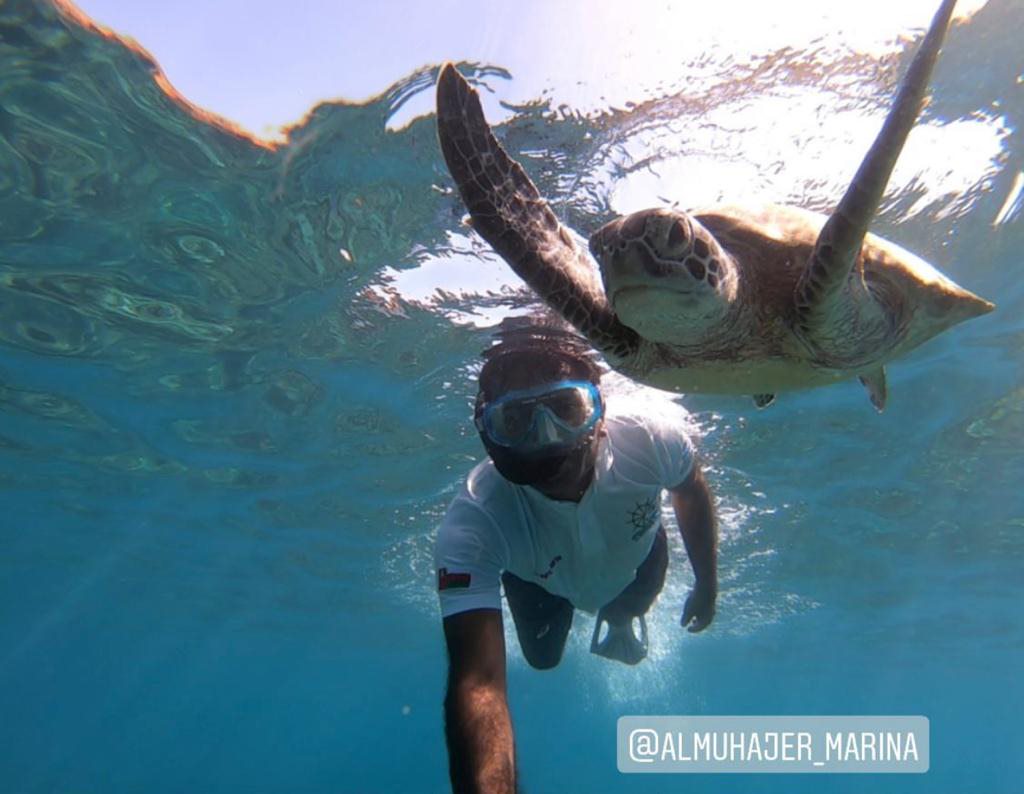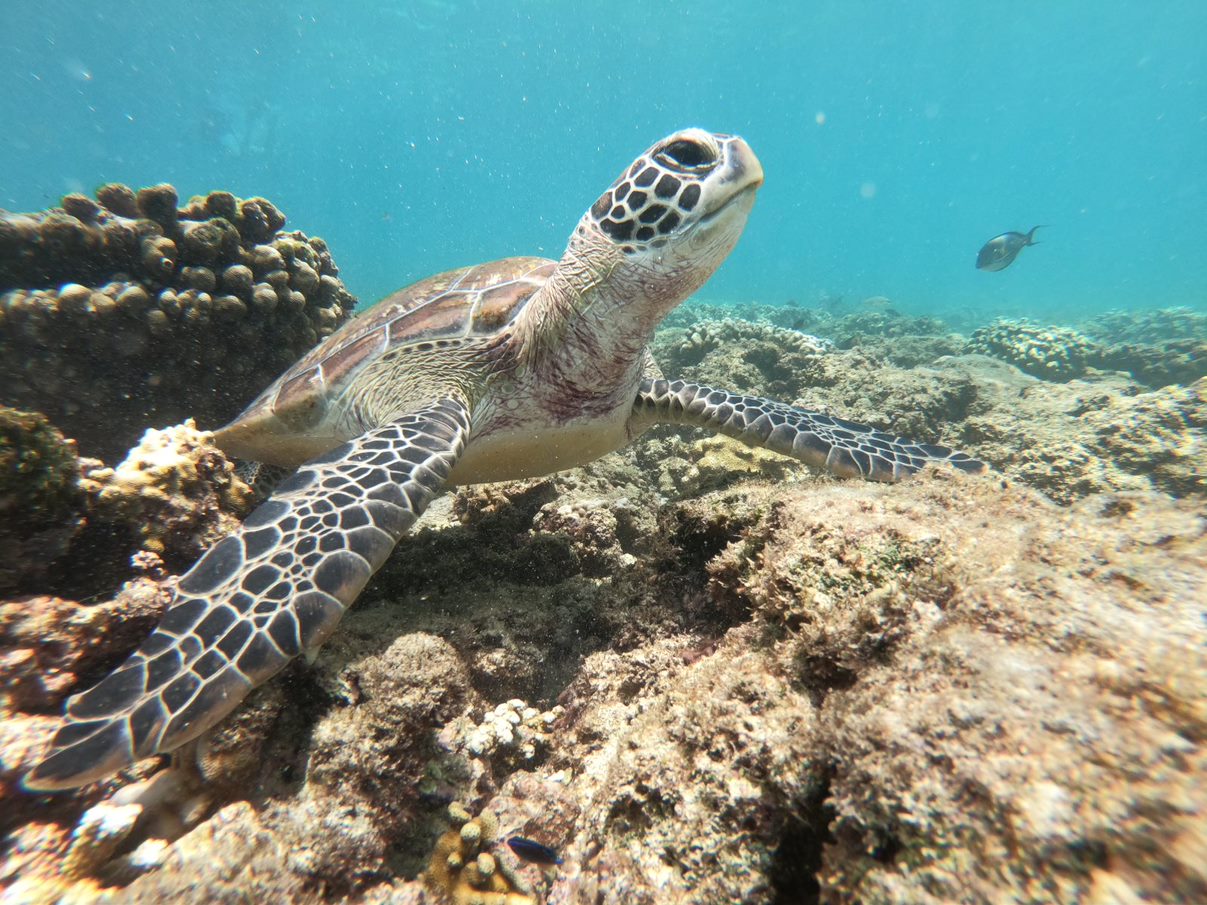
Turtles are one of the highlights of the Daymaniyat Islands. A few simple habits keep them — and the reef they depend on — healthy.
Oman is one of the most important places in the world for sea turtles. Five of the world's seven species have been recorded in Omani waters, and the Daymaniyat Islands are one of the easiest places near Muscat to see them in the wild.
Seeing a turtle glide past you on the reef is unforgettable. Here's how to make sure the encounter is a good one for the turtle, too.
Which turtles live around the Daymaniyat Islands?
The two species you're most likely to meet are:
- Green turtles, which graze on seagrass and algae. They can grow to over a metre long and are often seen resting on the bottom or surfacing to breathe.
- Hawksbill turtles, recognisable by their narrow, pointed beak and beautiful patterned shell. They feed on sponges among the coral and are critically endangered worldwide.
Both species nest on the islands' beaches, which is one of the reasons the reserve is protected.
How to snorkel responsibly with turtles
1. Keep your distance
Stay at least 3 metres away. A turtle that feels crowded will swim off, and a stressed turtle uses energy it needs for feeding and breathing.
2. Never touch, ride or hold a turtle
It's illegal in the reserve, it stresses the animal and it can spread bacteria to their skin and shell.
3. Don't block their way to the surface
Turtles have to come up to breathe. If one starts to rise, move aside and give it a clear path.
4. Don't chase
Float calmly and let the turtle carry on with what it's doing. Often, if you stay still, it will come closer by itself.
5. No feeding
Feeding changes natural behaviour and can make animals sick.
6. No flash photography
Use natural light for photos and videos, and never use a selfie stick to get closer.
Protecting the reef protects the turtles
Turtles depend on a healthy reef for food and shelter. You can help by:
- Using reef-safe sunscreen, or covering up with a rash vest instead.
- Never standing on or touching coral. Keep your fins up and away from the bottom.
- Taking all rubbish home. Plastic bags in the sea look like jellyfish, which some turtles eat.
- Leaving shells, coral and sand where they are.
Nesting season
Turtles come ashore at night to lay their eggs on sandy beaches, and hatchlings make their way to the sea weeks later. During nesting periods, Oman's environmental authorities may close some beaches to visitors. Our crew always follows the current rules — if a beach is closed, we snorkel elsewhere.
If you ever see a nesting turtle or hatchlings, keep well back, stay quiet and don't use lights.
See turtles with us
Our crew knows the reef well and will brief you on how to behave around wildlife before every snorkel. Choose a full day or half day snorkelling trip for the best chance of meeting a turtle, and read our snorkelling guide to prepare.